Meet Francesca Rubbiani: The co-founder of Preflet leading energy revolution
In this interview, Francesca Rubbiani explains how their AI digital assistant, LEO, simplifies fragmented building data to cut energy costs and lower emissions. She also shares her startup journey and discusses the company’s strategic expansion into Germany.
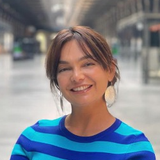

Great startup ideas rarely start in boring boardrooms. For Francesca Rubbiani, co-founder of the clean-tech startup Preflet. bwcon sat down with Francesca to talk about her journey from the fashion industry to clean-tech, how her AI assistant "LEO" is fixing broken energy data, and why she just moved part of her business to Germany.
Let’s start at the beginning. How did Preflet actually come to life?Francesca: I actually met my co-founder at a dessert buffet during an innovation summit in Lisbon! At the time, I was working as an innovation consultant in Sweden. We ended up chatting and asked ourselves a simple question: Why is energy data in buildings still so messy and fragmented? From that sweet tooth moment, the idea for Preflet slowly started taking shape.
That is an amazing origin story! What was the specific problem you wanted to solve? Francesca: The real pain point was how frustratingly disconnected building data is. Companies waste so much time and effort trying to manually sort through messy data from different sources. Because it is so chaotic, building performance suffers, which wastes money and hurts the environment. We wanted to build a smart, AI-driven solution to help energy managers focus on strategy instead of getting buried in paperwork.
Did you always know you wanted to be an entrepreneur?Francesca: Honestly, no! I never imagined I would co-found a clean-tech startup. My background is actually in fashion. Eventually, I realized the fashion world didn’t align with my values anymore, and I wanted to do something meaningful for sustainability.I also noticed that many corporations treat "innovation" as a theoretical topic for the future rather than something to act on today. I wanted to change that. When I met my co-founder, who has a brilliant technical background, we found the perfect mix: his deep tech skills and my heavy focus on user experience.
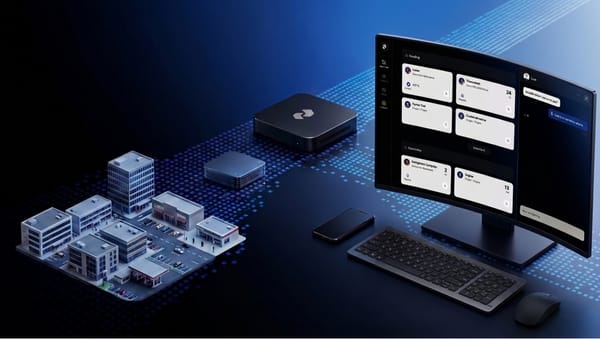
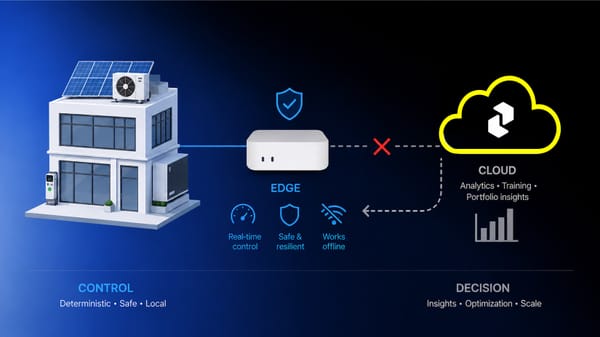
Can you explain what Preflet does in simple terms? Francesca: Imagine you manage multiple commercial buildings. You have to track massive amounts of data: electricity, gas, water, EV charging stations, weather conditions, and more.Preflet provides a digital energy manager named LEO to do that heavy lifting for you. LEO isn’t just a static dashboard; it is designed to be like a digital teammate. It collects and analyzes all that data, spots errors, and points out exactly where you are wasting energy so you can make smart decisions without needing to be a tech expert.
Can you give us a real-world example of LEO catching a mistake?Francesca: Definitely. We had a client in Italy use LEO and discover that their heating and cooling systems were running at full blast outside of business hours without anyone realizing it. With just a few quick scheduling tweaks, they saved over 18% on their monthly energy bills.Another client in Portugal found out that their biggest energy spikes happened in the morning because all their employees plugged in their devices at the exact same time. LEO caught this, allowing them to balance the load and cut down peak energy costs significantly.
You are already active in Portugal, Italy, and France. What is next for Preflet?Francesca: Our big focus right now is Germany. We see it as the strategic heart of Europe for long-term, sustainable solutions. We actually just moved part of our team to Reutlingen to be closer to the German innovation ecosystem. Things might move a bit slower there compared to other countries, but the institutional and community support is incredibly solid and reliable.
Building a startup is a wild ride. What challenges have you faced along the way?Francesca: Accessing energy data was a massive headache early on because every country uses different standards and smart-meter tech. It took us months just to figure out how to process data efficiently across different markets.On a personal level, being a female founder without a technical background in a tech-heavy industry means people don't always take you seriously at first. But I’ve learned to trust my skills. I look up to all the everyday women founders out there who are asserting themselves in business and making things happen. Representation matters so much.